

Videos
Watch HOYA Ondol floor heating being installed
Watch a room go from bare concrete to a finished, heated floor. Every video on this page has a written description, step by step.
Video description
Installing HOYA Ondol panels, step by step
The video is narrated, with captions in the player. This is a written description of it, for anyone who can’t watch it. Every floor gets its own panel and pipe layout, designed by HOYA Ondol.
01
The bare floor
The video starts on the bare concrete floor of an empty room.
02
Reflective foil
Reflective foil is rolled out to cover the floor.
03
The base panels
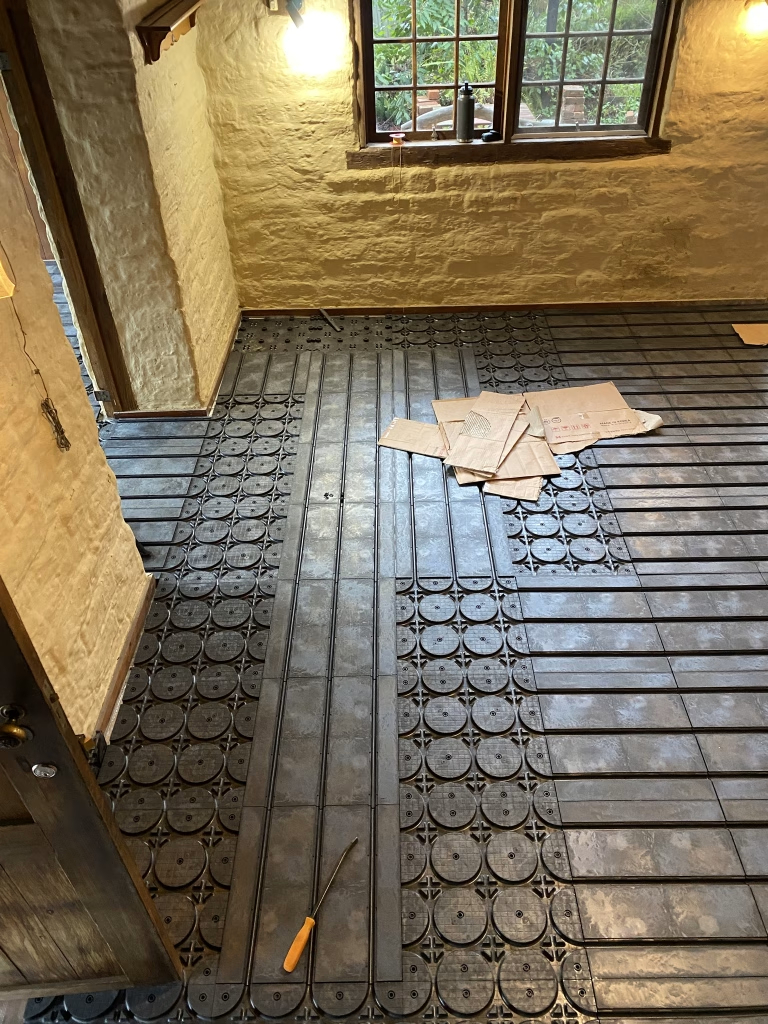
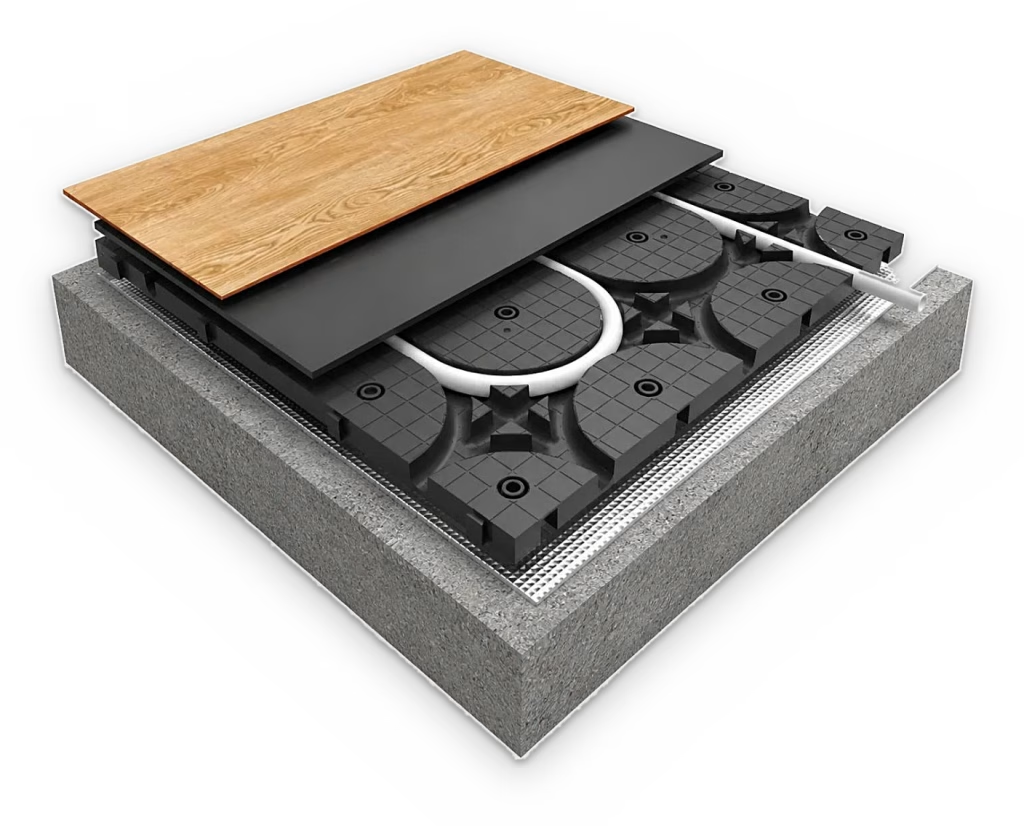
The black HOYA Ondol panels are laid across the room over the foil.
04
The heating pipe
White heating pipe is fed from a coil on an uncoiler and pressed into the channels of the panels in loops. Each circuit runs back to the manifold on the wall. The manifold and heat source connections must be made by a licensed plumber.
05
The cover panels
Flat cover panels go on over the pipe. They protect it and spread the heat evenly across the panel surface. (A-Panels have no flat cover panel; three cover strips press into their channels instead.) This step is described in the narration but not shown on screen.
06
The finished floor
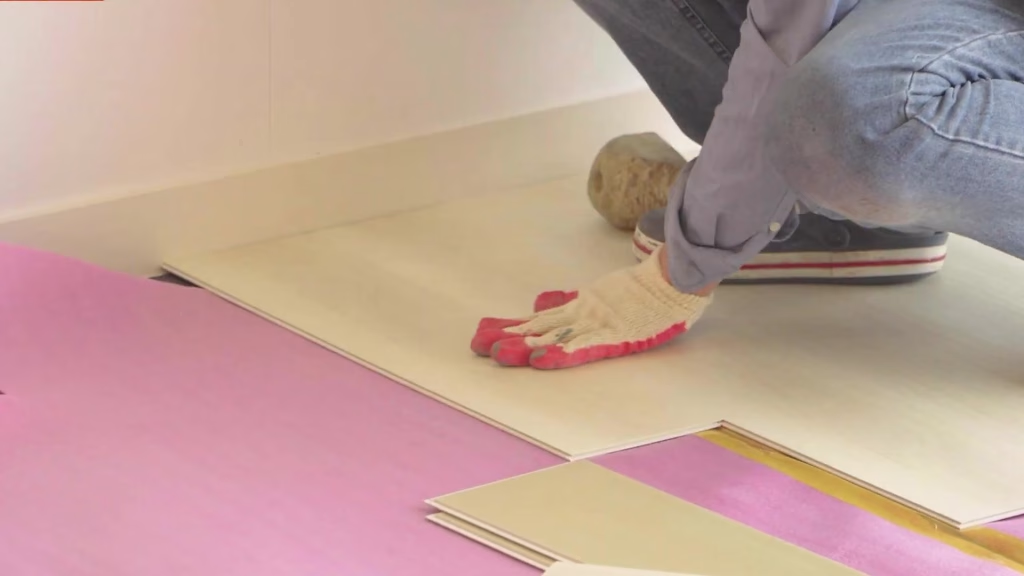
After pressure testing, timber boards are laid on an underlay over the heated floor. The underlay shown is supplied by the timber flooring supplier, not HOYA Ondol.
For the full method, read the HOYA Ondol installation guide.
From the factory
How HOYA Ondol panels are made
Hoya Hometech makes HOYA Ondol panels at its factory in Gunsan, South Korea. The narrated video follows the panels from the factory to a finished floor, with captions in the player and a full transcript below it.
Made by Hoya Hometech in Gunsan, South Korea. Full transcript below.
Video transcript: Hoya Hometech factory
Narrated, with background music. About 3 minutes 40 seconds. Captions are available in the video player.
Transcript: HOYA Ondol panels are made by Hoya Hometech, in its own factory in Gunsan, South Korea. The raw material is fed into the plant automatically, then processed, ready for moulding. Computer-controlled machines mould each panel, so every one comes out the same: 500 × 500 mm, and 26 mm high when finished. Finished panels are checked by hand, and stacked. They’re packed in boxes, and shipped to our Carrum Downs warehouse in Victoria, then sent nationwide.
On site, reflective foil goes down over the floor first. The joins in the foil are taped, so the layer stays flat and continuous. The base panels are laid across the room, following a layout designed for that floor. Each base panel clips to the next, edge to edge, so the floor locks together as one layer. The heating pipe is pressed into the panel channels, one circuit at a time. The curved channels in the B-Panels let the pipe turn back at the walls. Each loop is one heating circuit, and every circuit runs back to the manifold. Cover panels clip on over the pipe. There’s nothing to pour, and nothing to dry. They snap onto the base panels, and spread the heat evenly across the surface. The connections to the manifold and heat source are made by a licensed plumber. Then the floor finish goes on, and the room is back in use. With no screed to cure, the room can be used as soon as the floor finish is down. The HOYA Ondol warranty requires licensed connections. Send us your plans at hoyaondol.com.au.
The video shows the factory, then an installation in an office, ending with the furniture back in place. Some original on-screen captions have been blurred.
The panels can be laid by a builder, carpenter or flooring installer, following HOYA Ondol’s installation instructions and the panel and pipe layout designed for your floor, working with your hydronic installer. Manifold, heat pump or boiler connections must be made by a licensed plumber, and electrical work by a licensed electrician. In some states, laying the heating pipe itself is also licensed plumbing work, so check with your installer. Warranty requires licensed connections. This does not limit your rights under the Australian Consumer Law.
Keep exploring
More on how HOYA Ondol goes in
Projects
HOYA Ondol in Australian homes
Photos of HOYA Ondol floors going into Australian homes, room by room.
Installation
How HOYA Ondol panels are installed
The installation method, from preparing the floor to laying the cover panels.
Timber floors
Timber floors over floor heating
How engineered timber floats over HOYA Ondol panels, and what the timber warranty asks.
Installation and warranty
The panels can be laid by a builder, carpenter or flooring installer, following HOYA Ondol’s installation instructions and the panel and pipe layout designed for your floor, working with your hydronic installer. Manifold, heat pump or boiler connections must be made by a licensed plumber, and electrical work by a licensed electrician. In some states, laying the heating pipe itself is also licensed plumbing work, so check with your installer. Warranty requires licensed connections. This does not limit your rights under the Australian Consumer Law.
Planning floor heating for your home?
Send us your floor plan and we’ll quote the HOYA Ondol panels, pipe and manifold for your rooms.